
Spanish Johnny Songtekst Nederlandse Vertaling
Emmylou Harris - Spaanse Johnny
Emmylou Harris - Spanish Johnny songtekst en Nederlandse vertaling. Lees de originele lyrics met Nederlandse vertaling, betekenis van het nummer en meer talen.
Nederlandse vertaling - originele songtekst bekijken
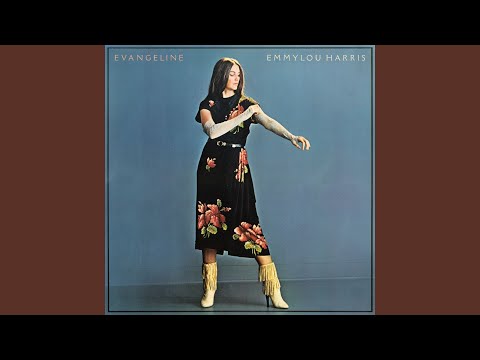
Emmylou Harris Spanish Johnny written by Paul Siebel
Emmylou Harris Spaanse Johnny geschreven door Paul Siebel
http://www.nashville.net/~kate/
http://www.nashville.net/~kate/
Ricky Skaggs Mandolin
Ricky Skaggs mandoline
Rodney Crowell Guitar
Rodney Crowell-gitaar
Emmylou Harris Guitar, Vocals
Emmylou Harris Gitaar, zang
Waylon Jennings Vocals
Waylon Jennings-zang
Mickey Raphael Harmonica
Mickey Raphael mondharmonica
Emory Gordy Bass
Emory Gordy Bass
Frank Reckard Guitar
Frank Reckard-gitaar
John Ware drums
John Ware-drums
Those other years, the dusty years
Die andere jaren, de stoffige jaren
We drove the big herds through
We hebben de grote kuddes er doorheen gereden
I tried to forget the miles we rode
Ik probeerde de kilometers die we reden te vergeten
And Spanish Johnny too
En de Spaanse Johnny ook
He'd sit beside a water ditch when all this herd was in
Hij zat naast een watersloot als de hele kudde binnen was
And he'd never harm a child but sing to his mandolin
En hij zou een kind nooit kwaad doen, maar op zijn mandoline zingen
The old talk, the old ways, and the dealin' of our game
Het oude gepraat, de oude manieren en de omgang met ons spel
Spanish Johnny never spoke, but sing a song of Spain
De Spaanse Johnny sprak nooit, maar zing een lied over Spanje
And his talk with men was vicious talk
En zijn gesprekken met mannen waren venijnige praatjes
When he was drunk on gin
Toen hij dronken was van de gin
Ah, but those were golden things he said to his mandolin
Ah, maar dat waren gouden dingen die hij tegen zijn mandoline zei
We had to stand, we tried to judge,
We moesten staan, we probeerden te oordelen,
We had to stop him then
Toen moesten we hem tegenhouden
For the hand so gentle to a child had killed so many men
Want de hand die zo zachtaardig was voor een kind had zoveel mannen gedood
He died a hard death long ago before the roads come in
Hij stierf lang geleden een harde dood voordat de wegen binnenkwamen
And the night before he swung he sung to his mandolin
En de avond voordat hij zwaaide, zong hij op zijn mandoline
Well, we carried him out in the mornin' sun
Nou, we hebben hem naar buiten gedragen in de ochtendzon
A man that done no good
Een man die niets goeds heeft gedaan
And we lowered him down in the cold clay
En we lieten hem in de koude klei zakken
Stuck in a cross of wood
Vastgezet in een kruis van hout
And a letter he wrote to his kinfolk
En een brief die hij aan zijn familie schreef
To tell them where he'd been
Om ze te vertellen waar hij was geweest
And we shipped it out to Mexico,
En we hebben het naar Mexico verscheept,
Along with his mandolin
Samen met zijn mandoline
From Emmylou Harris "Evangeline"
Van Emmylou Harris "Evangeline"
Warner Bros Records
Warner Bros Records
Two Ten Music(BMI)
Twee Tien Muziek (BMI)
Though other performers sold more records and earned greater fame, few
Hoewel andere artiesten meer platen verkochten en meer bekendheid verwierven, waren er maar weinig
left as profound an impact on contemporary music as Emmylou Harris.
heeft een even grote impact op de hedendaagse muziek gehad als Emmylou Harris.
Blessed with a crystalline voice, a remarkable gift for phrasing and a
Gezegend met een kristalheldere stem, een opmerkelijk talent voor frasering en een
restless creative spirit, she travelled a singular artistic path,
rusteloze creatieve geest, bewandelde ze een uniek artistiek pad,
proudly carrying the torch of "Cosmic American music" passed down by
trots de fakkel van de doorgegeven "Cosmic American music" dragend
her mentor, Gram Parsons. With the exception of only Neil Young -- not
haar mentor, Gram Parsons. Met uitzondering van alleen Neil Young – niet
surprisingly an occasional collaborator -- no other mainstream star
verrassend genoeg een occasionele medewerker - geen andere mainstream-ster
established a similarly large body of work as consistently
heeft een even groot oeuvre opgebouwd als consequent
iconoclastic, eclectic or daring; even more than three decades into
iconoclastisch, eclectisch of gedurfd; zelfs meer dan drie decennia later
her career, Harris' latter-day music remained as heartfelt, visionary
In haar carrière bleef de hedendaagse muziek van Harris net zo oprecht en visionair
and vital as her earliest recordings.
en essentieel als haar eerste opnames.
Harris was born on April 2, 1947 to a military family stationed in
Harris werd op 2 april 1947 geboren in een militair gezin dat gestationeerd was in
Birmingham, Alabama. After spending much of her childhood in North
Birmingham, Alabama. Na een groot deel van haar jeugd in Noord te hebben doorgebracht
Carolina, she moved to Woodbridge, Virginia while in her teens, and
Carolina, ze verhuisde als tiener naar Woodbridge, Virginia, en
graduated high school there as her class valedictorian. After winning
studeerde daar af als afscheidsvrouw van haar klas. Na het winnen
a dramatic scholarship at the University of North Carolina, she began
een dramatische beurs aan de Universiteit van North Carolina, begon ze
to seriously study music, learning to play songs by Bob Dylan and Joan
om serieus muziek te studeren en liedjes van Bob Dylan en Joan te leren spelen
Baez. Soon, Harris was performing in a duo with fellow UNC student
Baez. Al snel trad Harris op in duo met mede-UNC-student
Mike Williams, eventually quitting school to move to New York, only to
Mike Williams stopte uiteindelijk met school om naar New York te verhuizen
find the city's folk music community dying out in the wake of the
zie hoe de volksmuziekgemeenschap van de stad uitsterft in de nasleep van de
psychedelic era.
psychedelische tijdperk.
Still, Harris remained in New York, travelling the Greenwich Village
Toch bleef Harris in New York en reisde door Greenwich Village
club circuit before becoming a regular at Gerdes Folk City, where she
clubcircuit voordat ze een vaste klant werd bij Gerdes Folk City, waar ze
struck up friendships with fellow folkies Jerry Jeff Walker, David
sloot vriendschappen met mede-folkgenoten Jerry Jeff Walker, David
Bromberg and Paul Siebel. After marrying songwriter Tom Slocum in
Bromberg en Paul Siebel. Nadat hij met songwriter Tom Slocum trouwde
1969, she recorded her debut LP, 1970's Gliding Bird. Shortly after
In 1969 nam ze haar debuut-LP op, Gliding Bird uit de jaren 70. Kort daarna
the record's release, however, Harris' label declared bankruptcy, and
de release van de plaat, maar het label van Harris werd failliet verklaard, en
while pregnant with her first child, her marriage began to fall apart.
Terwijl ze zwanger was van haar eerste kind, begon haar huwelijk uiteen te vallen.
After moving to Nashville, she and Slocum divorced, leaving Harris to
Nadat ze naar Nashville waren verhuisd, scheidden zij en Slocum, waardoor Harris achterbleef
raise daughter Hallie on her own. After several months of struggle and
dochter Hallie in haar eentje opvoeden. Na enkele maanden van strijd en
poverty, she moved back in with her parents, who had since bought a
armoede, trok ze weer bij haar ouders in, die sindsdien een huis hadden gekocht
farm outside of Washington, D.C.
boerderij buiten Washington, D.C.
There she returned to performing, starting a trio with local musicians
Daar keerde ze terug naar het optreden en begon een trio met lokale muzikanten
Gerry Mule and Tom Guidera. One evening in 1971, while playing at an
Gerry Mule en Tom Guidera. Op een avond in 1971, tijdens het spelen in een
area club called Clyde's, the trio performed to a crowd which included
In de plaatselijke club genaamd Clyde's trad het trio op voor een publiek, inclusief
members of the country-rock pioneers the Flying Burrito Brothers. In
leden van de countryrockpioniers de Flying Burrito Brothers. In
the wake of the departure of Gram Parsons, the band's founder, the
de nasleep van het vertrek van Gram Parsons, de oprichter van de band, de
Burritos were then led by ex-Byrd Chris Hillman, who was so impressed
Burrito's werden vervolgens geleid door ex-Byrd Chris Hillman, die zo onder de indruk was
by Harris' talents that he considered inviting her to join the group.
door de talenten van Harris dat hij overwoog haar uit te nodigen om zich bij de groep aan te sluiten.
Instead, Hillman himself quit to join Stephen Stills' Manassas, but he
In plaats daarvan stopte Hillman zelf om zich bij Stephen Stills' Manassas aan te sluiten, maar hij
recommended her to Parsons, who wanted a female vocalist to flesh out
raadde haar aan bij Parsons, die een zangeres wilde hebben
the sound of his solo work, a trailblazing fusion of country and rock
het geluid van hem
'n' roll he dubbed "Cosmic American music." Their connection was
instant, and soon Harris was learning about country music and singing
harmony on Parsons' solo debut, 1972's GP. A tour with Parsons'
back-up unit the Fallen Angels followed, and in 1973 they returned to
the studio to cut his landmark LP Grievous Angel.
On September 19, just weeks after the album sessions ended, Parsons'
fondness for drugs and alcohol finally caught up to him, and he was
found dead in a hotel room outside of the Joshua Tree National
Monument in California. At the time, Harris was back in Washington,
collecting her daughter for a planned move to the West Coast. Instead,
she remained in D.C., reuniting with Tom Guidera to form the Angel
Band. The group signed to Reprise and relocated to Los Angeles to
begin work on Harris' solo major label debut, 1975's acclaimed Pieces
of the Sky, an impeccable collection made up largely of diverse covers
ranging in origin from Merle Haggard to the Beatles. Produced by Brian
Ahern, who would go on to helm Harris' next ten records--as well as
becoming her second husband--Pieces of the Sky's second single, a
rendition of the Louvin Brothers' "If I Could Only Win Your Love,"
became her first Top Five hit. "Light of the Stable,' a Christmas
single complete with backing vocals from Dolly Parton, Linda Ronstadt
and Neil Young, soon followed; Harris then repaid the favor by singing
on Ronstadt's "The Sweetest Gift" and Young's "Star of Bethlehem."
For her second LP, 1976's Elite Hotel, Harris established a new
backing unit, the Hot Band, which featured legendary Elvis Presley
sidemen James Burton and Glen D. Hardin as well as a young songwriter
named Rodney Crowell on back-up vocals and rhythm guitar. The
resulting album proved to be a smash, with covers of Buck Owens'
"Together Again" and the Patsy Cline perennial "Sweet Dreams" both
topping the charts. Before beginning sessions for her third effort,
1977's Luxury Liner, Harris guested on Bob Dylan's Desire and appeared
in Martin Scorsese's filmed document of the Band's legendary final
performance, The Last Waltz. Quarter Moon in a Ten Cent Town followed
in 1978, led by the single "Two More Bottles of Wine," her third
Number One. The record was Crowell's last with the Hot Band; one of
the tracks, "Green Rolling Hills," included backing from Ricky Skaggs,
soon to become Crowell's replacement as Harris' vocal partner.
1979's Blue Kentucky Girl was her most country-oriented work to date,
an indication of what was to come a year later with Roses in the Snow,
a full-fledged excursion into acoustic bluegrass. In the summer of
1980, a duet with Roy Orbison, "That Lovin' You Feelin' Again," hit
the Top Ten; a yuletide LP, Light of the Stable: The Christmas Album,
followed at the end of year, at a time during which Harris had quit
touring to focus on raising her second daughter, Meghann. Evangeline,
a patchwork of songs left off of previous albums, appeared in 1981.
Shortly after, Skaggs left the Hot Band to embark on a solo career;
his replacement was Barry Tashian, a singer/songwriter best known for
fronting the 1960s rock band the Remains.
In 1982, drummer John Ware, the final holdover from the first Hot Band
line-up, left the group; at the same time, Harris' marriage to Ahern
was also beginning to disintegrate. After 1981's Cimarron, Harris and
the Hot Band cut a live album, Last Date, named in honor of the
album's chart-topping single "(Lost His Love) On Our Last Date," a
vocal version of the Floyd Cramer instrumental. Quickly, they returned
to the studio to record White Shoes, Harris' final LP with Ahern at
the helm. Her most far-ranging affair yet, it included covers of Donna
Summer's "On the Radio," Johnny Ace's "Pledging My Love," and Sandy
Denny's "Old-Fashioned Waltz."
After leaving Ahern, she and her children moved back to Nashville.
There, Harris joined forces with singer/songwriter Paul Kennerley, on
whose 1980 concept album The Legend of Jesse James she had sung
back-up. Together, they began formulating a record called The Ballad
of Sally Rose, employing the pseudonym Harris often used on the road
to veil what was otherwise a clearly autobiographical portrait of her
own life. Though a commercial failure, the 1985 record proved pivotal
in Harris' continued evolution as an artist and a risk-taker; it also
marked another chapter in her personal life when she and Kennerley wed
shortly after concluding their tour. Angel Band, a subtle, acoustic
collection of traditional country spirituals, followed, although the
record was not issued until 1987, after the release of its immediate
follow-up, Thirteen.
Harris, Dolly Parton and Linda Ronstadt had first toyed with the idea
of recording an album together as far back as 1977, only to watch the
project falter in light of touring commitments and other red tape.
Finally, in 1987, they issued Trio, a collection which proved to be
Harris' best-selling album to date, generating the hits "To Know Him
Is to Love Him" (a cover of the Phil Spector classic), "Telling Me
Lies" and "Those Memories of You." The record's success spurred the
1990 release of Duets, a compilation of her earlier hits in
conjunction with George Jones, Willie Nelson, Gram Parsons and others.
Fronting a new band, the Nash Ramblers, in 1992 she issued At the
Ryman, a live set recorded at Nashville's legendary Ryman Auditorium,
the former home of the Grand Ole Opry. At the time of the record's
release, Harris was also serving a term as President of the Country
Music Foundation.
In 1993, she ended her long association with Warner Bros./Reprise to
move to Asylum Records, where she released Cowgirl's Prayer shortly
after her separation from Paul Kennerley. Two years later, at a stage
in her career at which most performers retreat to the safety of
rehashing their greatest hits again and again, Harris issued Wrecking
Ball, perhaps her most adventuresome record to date. Produced by
Daniel Lanois, the New Orleans-based artist best known for his
atmospheric work with U2, Peter Gabriel and Bob Dylan, Wrecking Ball
was a hypnotic, staggeringly beautiful work comprised of songs ranging
from the Neil Young-penned title track (which featured its writer on
backing vocals) to Jimi Hendrix's "May This Be Love" and the talented
newcomer Gillian Welch's "Orphan Girl." A three-disc retrospective of
her years with Warner Bros., Portraits, appeared in 1996, and in 1998
Harris resurfaced with Spyboy. -- Jason Ankeny, All-Music Guide
All lyrics are property and copyright of their respective owners. Translation provided for educational purposes only.