
Spanish Johnny Letras Tradução em Português
Emmylou Harris - Johnny espanhol
Emmylou Harris - Spanish Johnny letra e tradução em português. Leia os lyrics originais com tradução em português, significado da música e outras traduções.
Tradução em português - ver letra original
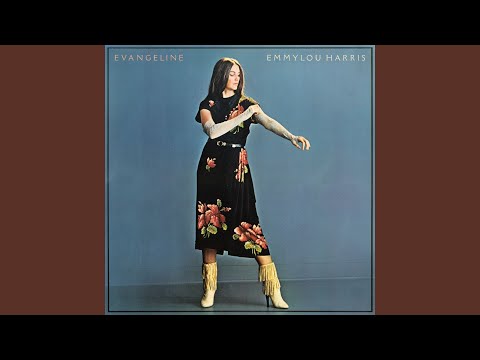
Emmylou Harris Spanish Johnny written by Paul Siebel
Emmylou Harris Espanhol Johnny escrito por Paul Siebel
http://www.nashville.net/~kate/
http://www.nashville.net/~kate/
Ricky Skaggs Mandolin
Bandolim de Ricky Skaggs
Rodney Crowell Guitar
Guitarra Rodney Crowell
Emmylou Harris Guitar, Vocals
Emmylou Harris guitarra, voz
Waylon Jennings Vocals
Vocais de Waylon Jennings
Mickey Raphael Harmonica
Gaita Mickey Raphael
Emory Gordy Bass
Emory Gordy Baixo
Frank Reckard Guitar
Guitarra de Frank Reckard
John Ware drums
Bateria de John Ware
Those other years, the dusty years
Aqueles outros anos, os anos empoeirados
We drove the big herds through
Nós conduzimos os grandes rebanhos
I tried to forget the miles we rode
Tentei esquecer as milhas que percorremos
And Spanish Johnny too
E Johnny espanhol também
He'd sit beside a water ditch when all this herd was in
Ele se sentava ao lado de uma vala de água quando todo esse rebanho estava
And he'd never harm a child but sing to his mandolin
E ele nunca machucaria uma criança, mas cantaria para seu bandolim
The old talk, the old ways, and the dealin' of our game
A velha conversa, os velhos hábitos e a negociação do nosso jogo
Spanish Johnny never spoke, but sing a song of Spain
Espanhol Johnny nunca falou, mas canta uma canção da Espanha
And his talk with men was vicious talk
E sua conversa com os homens era uma conversa cruel
When he was drunk on gin
Quando ele estava bêbado de gim
Ah, but those were golden things he said to his mandolin
Ah, mas essas eram coisas de ouro que ele disse ao seu bandolim
We had to stand, we tried to judge,
Tivemos que ficar de pé, tentamos julgar,
We had to stop him then
Tivemos que pará-lo então
For the hand so gentle to a child had killed so many men
Pois a mão tão gentil com uma criança matou tantos homens
He died a hard death long ago before the roads come in
Ele morreu uma morte difícil há muito tempo, antes das estradas entrarem.
And the night before he swung he sung to his mandolin
E na noite anterior ele cantou com seu bandolim
Well, we carried him out in the mornin' sun
Bem, nós o carregamos ao sol da manhã
A man that done no good
Um homem que não fez nada de bom
And we lowered him down in the cold clay
E nós o abaixamos no barro frio
Stuck in a cross of wood
Preso em uma cruz de madeira
And a letter he wrote to his kinfolk
E uma carta que ele escreveu para seus parentes
To tell them where he'd been
Para dizer a eles onde ele esteve
And we shipped it out to Mexico,
E nós enviamos para o México,
Along with his mandolin
Junto com seu bandolim
From Emmylou Harris "Evangeline"
De Emmylou Harris "Evangeline"
Warner Bros Records
Registros da Warner Bros.
Two Ten Music(BMI)
Duas Dez Músicas (IMC)
Though other performers sold more records and earned greater fame, few
Embora outros artistas tenham vendido mais discos e conquistado maior fama, poucos
left as profound an impact on contemporary music as Emmylou Harris.
deixou um impacto tão profundo na música contemporânea quanto Emmylou Harris.
Blessed with a crystalline voice, a remarkable gift for phrasing and a
Abençoado com uma voz cristalina, um notável dom para fraseado e uma
restless creative spirit, she travelled a singular artistic path,
espírito criativo inquieto, percorreu um caminho artístico singular,
proudly carrying the torch of "Cosmic American music" passed down by
carregando orgulhosamente a tocha da "música cósmica americana" transmitida por
her mentor, Gram Parsons. With the exception of only Neil Young -- not
seu mentor, Gram Parsons. Com exceção apenas de Neil Young - não
surprisingly an occasional collaborator -- no other mainstream star
surpreendentemente um colaborador ocasional - nenhuma outra estrela mainstream
established a similarly large body of work as consistently
estabeleceu um corpo de trabalho igualmente grande, consistentemente
iconoclastic, eclectic or daring; even more than three decades into
iconoclasta, eclética ou ousada; ainda mais de três décadas depois
her career, Harris' latter-day music remained as heartfelt, visionary
sua carreira, a música moderna de Harris permaneceu tão sincera e visionária
and vital as her earliest recordings.
e vital como suas primeiras gravações.
Harris was born on April 2, 1947 to a military family stationed in
Harris nasceu em 2 de abril de 1947, em uma família de militares estacionados em
Birmingham, Alabama. After spending much of her childhood in North
Birmingham, Alabama. Depois de passar grande parte de sua infância no Norte
Carolina, she moved to Woodbridge, Virginia while in her teens, and
Carolina, ela se mudou para Woodbridge, Virgínia, quando era adolescente, e
graduated high school there as her class valedictorian. After winning
se formou no ensino médio lá como oradora da turma. Depois de vencer
a dramatic scholarship at the University of North Carolina, she began
uma bolsa dramática na Universidade da Carolina do Norte, ela começou
to seriously study music, learning to play songs by Bob Dylan and Joan
estudar música seriamente, aprendendo a tocar músicas de Bob Dylan e Joan
Baez. Soon, Harris was performing in a duo with fellow UNC student
Báez. Logo, Harris estava se apresentando em dupla com outro estudante da UNC
Mike Williams, eventually quitting school to move to New York, only to
Mike Williams, acabou abandonando a escola para se mudar para Nova York, apenas para
find the city's folk music community dying out in the wake of the
encontrar a comunidade de música folclórica da cidade morrendo na sequência do
psychedelic era.
era psicodélica.
Still, Harris remained in New York, travelling the Greenwich Village
Mesmo assim, Harris permaneceu em Nova York, viajando pelo Greenwich Village
club circuit before becoming a regular at Gerdes Folk City, where she
circuito de clubes antes de se tornar regular no Gerdes Folk City, onde ela
struck up friendships with fellow folkies Jerry Jeff Walker, David
fez amizade com outros folkies Jerry Jeff Walker, David
Bromberg and Paul Siebel. After marrying songwriter Tom Slocum in
Bromberg e Paul Siebel. Depois de se casar com o compositor Tom Slocum em
1969, she recorded her debut LP, 1970's Gliding Bird. Shortly after
Em 1969, ela gravou seu primeiro LP, Gliding Bird, de 1970. Pouco depois
the record's release, however, Harris' label declared bankruptcy, and
o lançamento do disco, no entanto, a gravadora de Harris declarou falência, e
while pregnant with her first child, her marriage began to fall apart.
enquanto estava grávida do primeiro filho, seu casamento começou a desmoronar.
After moving to Nashville, she and Slocum divorced, leaving Harris to
Depois de se mudar para Nashville, ela e Slocum se divorciaram, deixando Harris sozinho.
raise daughter Hallie on her own. After several months of struggle and
crie a filha Hallie sozinha. Depois de vários meses de luta e
poverty, she moved back in with her parents, who had since bought a
pobreza, ela voltou a morar com os pais, que desde então haviam comprado um
farm outside of Washington, D.C.
fazenda fora de Washington, D.C.
There she returned to performing, starting a trio with local musicians
Lá ela voltou a se apresentar, formando um trio com músicos locais
Gerry Mule and Tom Guidera. One evening in 1971, while playing at an
Gerry Mule e Tom Guidera. Certa noite, em 1971, enquanto tocava em um
area club called Clyde's, the trio performed to a crowd which included
clube da área chamado Clyde's, o trio se apresentou para uma multidão que incluía
members of the country-rock pioneers the Flying Burrito Brothers. In
membros dos pioneiros do country rock, os Flying Burrito Brothers. Em
the wake of the departure of Gram Parsons, the band's founder, the
após a saída de Gram Parsons, o fundador da banda, o
Burritos were then led by ex-Byrd Chris Hillman, who was so impressed
Os Burritos foram então liderados pelo ex-Byrd Chris Hillman, que ficou tão impressionado
by Harris' talents that he considered inviting her to join the group.
pelos talentos de Harris que ele considerou convidá-la para se juntar ao grupo.
Instead, Hillman himself quit to join Stephen Stills' Manassas, but he
Em vez disso, o próprio Hillman saiu para se juntar ao Manassas de Stephen Stills, mas ele
recommended her to Parsons, who wanted a female vocalist to flesh out
recomendou-a a Parsons, que queria uma vocalista feminina para dar corpo
the sound of his solo work, a trailblazing fusion of country and rock
o som dele
'n' roll he dubbed "Cosmic American music." Their connection was
instant, and soon Harris was learning about country music and singing
harmony on Parsons' solo debut, 1972's GP. A tour with Parsons'
back-up unit the Fallen Angels followed, and in 1973 they returned to
the studio to cut his landmark LP Grievous Angel.
On September 19, just weeks after the album sessions ended, Parsons'
fondness for drugs and alcohol finally caught up to him, and he was
found dead in a hotel room outside of the Joshua Tree National
Monument in California. At the time, Harris was back in Washington,
collecting her daughter for a planned move to the West Coast. Instead,
she remained in D.C., reuniting with Tom Guidera to form the Angel
Band. The group signed to Reprise and relocated to Los Angeles to
begin work on Harris' solo major label debut, 1975's acclaimed Pieces
of the Sky, an impeccable collection made up largely of diverse covers
ranging in origin from Merle Haggard to the Beatles. Produced by Brian
Ahern, who would go on to helm Harris' next ten records--as well as
becoming her second husband--Pieces of the Sky's second single, a
rendition of the Louvin Brothers' "If I Could Only Win Your Love,"
became her first Top Five hit. "Light of the Stable,' a Christmas
single complete with backing vocals from Dolly Parton, Linda Ronstadt
and Neil Young, soon followed; Harris then repaid the favor by singing
on Ronstadt's "The Sweetest Gift" and Young's "Star of Bethlehem."
For her second LP, 1976's Elite Hotel, Harris established a new
backing unit, the Hot Band, which featured legendary Elvis Presley
sidemen James Burton and Glen D. Hardin as well as a young songwriter
named Rodney Crowell on back-up vocals and rhythm guitar. The
resulting album proved to be a smash, with covers of Buck Owens'
"Together Again" and the Patsy Cline perennial "Sweet Dreams" both
topping the charts. Before beginning sessions for her third effort,
1977's Luxury Liner, Harris guested on Bob Dylan's Desire and appeared
in Martin Scorsese's filmed document of the Band's legendary final
performance, The Last Waltz. Quarter Moon in a Ten Cent Town followed
in 1978, led by the single "Two More Bottles of Wine," her third
Number One. The record was Crowell's last with the Hot Band; one of
the tracks, "Green Rolling Hills," included backing from Ricky Skaggs,
soon to become Crowell's replacement as Harris' vocal partner.
1979's Blue Kentucky Girl was her most country-oriented work to date,
an indication of what was to come a year later with Roses in the Snow,
a full-fledged excursion into acoustic bluegrass. In the summer of
1980, a duet with Roy Orbison, "That Lovin' You Feelin' Again," hit
the Top Ten; a yuletide LP, Light of the Stable: The Christmas Album,
followed at the end of year, at a time during which Harris had quit
touring to focus on raising her second daughter, Meghann. Evangeline,
a patchwork of songs left off of previous albums, appeared in 1981.
Shortly after, Skaggs left the Hot Band to embark on a solo career;
his replacement was Barry Tashian, a singer/songwriter best known for
fronting the 1960s rock band the Remains.
In 1982, drummer John Ware, the final holdover from the first Hot Band
line-up, left the group; at the same time, Harris' marriage to Ahern
was also beginning to disintegrate. After 1981's Cimarron, Harris and
the Hot Band cut a live album, Last Date, named in honor of the
album's chart-topping single "(Lost His Love) On Our Last Date," a
vocal version of the Floyd Cramer instrumental. Quickly, they returned
to the studio to record White Shoes, Harris' final LP with Ahern at
the helm. Her most far-ranging affair yet, it included covers of Donna
Summer's "On the Radio," Johnny Ace's "Pledging My Love," and Sandy
Denny's "Old-Fashioned Waltz."
After leaving Ahern, she and her children moved back to Nashville.
There, Harris joined forces with singer/songwriter Paul Kennerley, on
whose 1980 concept album The Legend of Jesse James she had sung
back-up. Together, they began formulating a record called The Ballad
of Sally Rose, employing the pseudonym Harris often used on the road
to veil what was otherwise a clearly autobiographical portrait of her
own life. Though a commercial failure, the 1985 record proved pivotal
in Harris' continued evolution as an artist and a risk-taker; it also
marked another chapter in her personal life when she and Kennerley wed
shortly after concluding their tour. Angel Band, a subtle, acoustic
collection of traditional country spirituals, followed, although the
record was not issued until 1987, after the release of its immediate
follow-up, Thirteen.
Harris, Dolly Parton and Linda Ronstadt had first toyed with the idea
of recording an album together as far back as 1977, only to watch the
project falter in light of touring commitments and other red tape.
Finally, in 1987, they issued Trio, a collection which proved to be
Harris' best-selling album to date, generating the hits "To Know Him
Is to Love Him" (a cover of the Phil Spector classic), "Telling Me
Lies" and "Those Memories of You." The record's success spurred the
1990 release of Duets, a compilation of her earlier hits in
conjunction with George Jones, Willie Nelson, Gram Parsons and others.
Fronting a new band, the Nash Ramblers, in 1992 she issued At the
Ryman, a live set recorded at Nashville's legendary Ryman Auditorium,
the former home of the Grand Ole Opry. At the time of the record's
release, Harris was also serving a term as President of the Country
Music Foundation.
In 1993, she ended her long association with Warner Bros./Reprise to
move to Asylum Records, where she released Cowgirl's Prayer shortly
after her separation from Paul Kennerley. Two years later, at a stage
in her career at which most performers retreat to the safety of
rehashing their greatest hits again and again, Harris issued Wrecking
Ball, perhaps her most adventuresome record to date. Produced by
Daniel Lanois, the New Orleans-based artist best known for his
atmospheric work with U2, Peter Gabriel and Bob Dylan, Wrecking Ball
was a hypnotic, staggeringly beautiful work comprised of songs ranging
from the Neil Young-penned title track (which featured its writer on
backing vocals) to Jimi Hendrix's "May This Be Love" and the talented
newcomer Gillian Welch's "Orphan Girl." A three-disc retrospective of
her years with Warner Bros., Portraits, appeared in 1996, and in 1998
Harris resurfaced with Spyboy. -- Jason Ankeny, All-Music Guide
All lyrics are property and copyright of their respective owners. Translation provided for educational purposes only.